
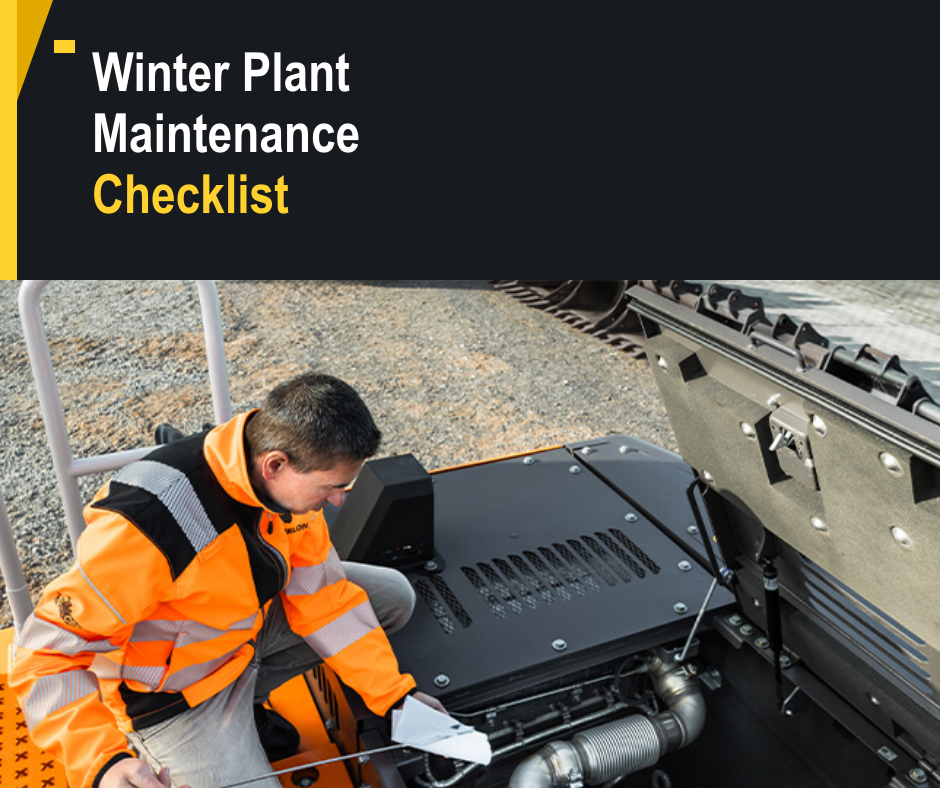
Cold mornings, wet ground and mud put extra demands on your machinery. This winter plant maintenance checklist covers the checks and servicing jobs to organise before the weather turns.
If you have groundworks, drainage or landscaping jobs booked through winter, an unreliable start or faulty demister can hold up the morning. Check the machines you will need, note any faults and book servicing around the work already in the diary.
Start with a winter service plan
Check each machine’s operating hours and service history against the manufacturer’s schedule. Some maintenance falls due after a set number of hours, while other jobs are due by date. Both matter when booking a service.
If your excavator is booked on a drainage job next week, arrange its service around that commitment. Let the service team know about any faults in advance so they can plan the work and check which parts may be needed.
A useful winter maintenance record includes:
- Machine details: make, model, serial number and current hours.
- Servicing: the last completed service and the next scheduled maintenance.
- Reported faults: warning messages, leaks, starting issues or changes in performance.
- Work commitments: when and where the machine is needed next.
Record a symptom when it appears. A note explaining whether a fault happens when starting, after warming up or under load gives the engineer more useful information than “not running right”.
Check coolant protection and fluid requirements
Check the coolant level and look for evidence of leaks using the procedure in the machine’s manual. Ask your service team to test its condition and frost protection against the manufacturer’s specification.
Engine oil, hydraulic fluid and grease must also suit the machine and its operating conditions. There is no single winter oil grade or antifreeze mixture that applies to every excavator, loader or telehandler.
If you are unsure what is already in the system, get advice before topping up or mixing products. Keep a record of the correct specifications so operators and anyone ordering supplies are working from the same information.
Deal with slow starting before it disrupts a job
If a machine is slow to start, have it checked before colder weather makes the problem worse. Battery condition, connections and the charging system all deserve attention when preparing machinery for colder weather.
Make a note of repeated starting attempts, unusually slow cranking or warning messages. Ask a competent engineer to check the cause rather than assuming a replacement battery will solve it.
Follow the manufacturer’s procedure for starting the machine and allowing it to warm up. The time needed and any permitted starting aids vary between machines, so check the manual for each model.
Inspect tracks, tyres and the undercarriage
Mud can make damage harder to spot. Once the machine is safely parked, inspect accessible areas for abnormal wear, missing components and signs of leakage.
- Tracked machines: look for damaged tracks, uneven wear and problems around rollers and idlers. Check track tension using the model’s specified procedure.
- Wheeled machines: check tyre condition, cuts and pressures against the manufacturer’s recommendations for the application.
- All machines: report a change in travel behaviour, unusual noise or a new leak promptly.
Photographs can help the service team understand a developing fault. Take them from a safe position and include a wider view as well as a detailed photograph.
Make visibility part of the maintenance routine
Shorter days make working lights, clean glass and effective demisting particularly important. Check these before the machine is needed, rather than discovering a problem during an early start.
- Test working lights, beacons and other fitted warning equipment.
- Keep mirrors, camera lenses and windows clean.
- Check wiper blades and use a suitable washer fluid.
- Confirm that heating and demisting systems work properly.
- Inspect door and window seals for damage.
These checks reflect the seasonal priorities in Develon’s winter maintenance guidance. Always follow the instructions for the equipment fitted to your particular machine.
Include attachments in your winter plant maintenance checklist
Check buckets, forks, grabs and other attachments as part of your regular maintenance routine.
Look for damage or wear on cutting edges, guards, hoses and accessible components. Check the attachment’s own maintenance requirements, including any specified lubrication and inspections of its mounting and locking arrangements.
Report damaged hydraulic hoses or leaking components to a competent engineer. Keep routine operator checks separate from repairs that require specialist training or equipment.
When ordering replacements, give the parts team the attachment details as well as the machine model. A photograph of an identification plate can help avoid confusion between similar versions.
Finish the day with cleaning and a defect report
Clearing accumulated mud helps make the next inspection more effective. Pay attention to the undercarriage and keep access steps and handholds clear, following the manufacturer’s cleaning instructions.
Before freezing conditions, remove mud and moisture that could freeze around moving components. Follow the machine’s parking guidance and use suitable ground with good drainage.
Build a short handover into the end of the shift. Record what needs attention, who has been told and whether the issue has been resolved. A fault left in someone’s memory is easy to miss when a different operator takes over.
Prepare properly for quieter periods
A machine that will stand unused needs a storage plan. Check its manual for the appropriate cleaning, lubrication, battery care, fluid checks and recommissioning requirements.
Agree who will inspect it during the quieter period and what needs checking before it returns to work. This is also a useful time to arrange outstanding repairs and identify parts required for the next planned service.
Daily inspections remain necessary when work resumes. A recent service does not replace the operator’s checks before use.
Your quick winter maintenance checklist
Use this as a planning reminder alongside the machine’s operation and maintenance manual:
- Review service dates, hours and upcoming work.
- Record faults and arrange investigation where needed.
- Check coolant protection and confirm fluid specifications.
- Have starting or battery concerns assessed.
- Inspect tyres or tracks, undercarriage and attachments.
- Test lights, wipers, cameras and demisting equipment.
- Keep the machine clean and record defects at handover.
- Follow the correct procedures for parking, storage and returning to work.
Arrange winter machinery servicing with Kellands
To arrange a winter service, give the Kellands team your machine’s make, model, serial number and current hours. Describe any faults or changes in performance you have noticed.
You can request a machinery service online or contact our service department on 01278 411540 or service@kellands.com.
For filters, wear parts and other maintenance requirements, send a parts enquiry or call 01278 411541. Have the relevant machine and attachment details ready so the team can help identify what you need.
To meet the people behind that support, read our Kellands Service Department spotlight.
Featured photograph: Develon manufacturer photography, showing an excavator maintenance check.