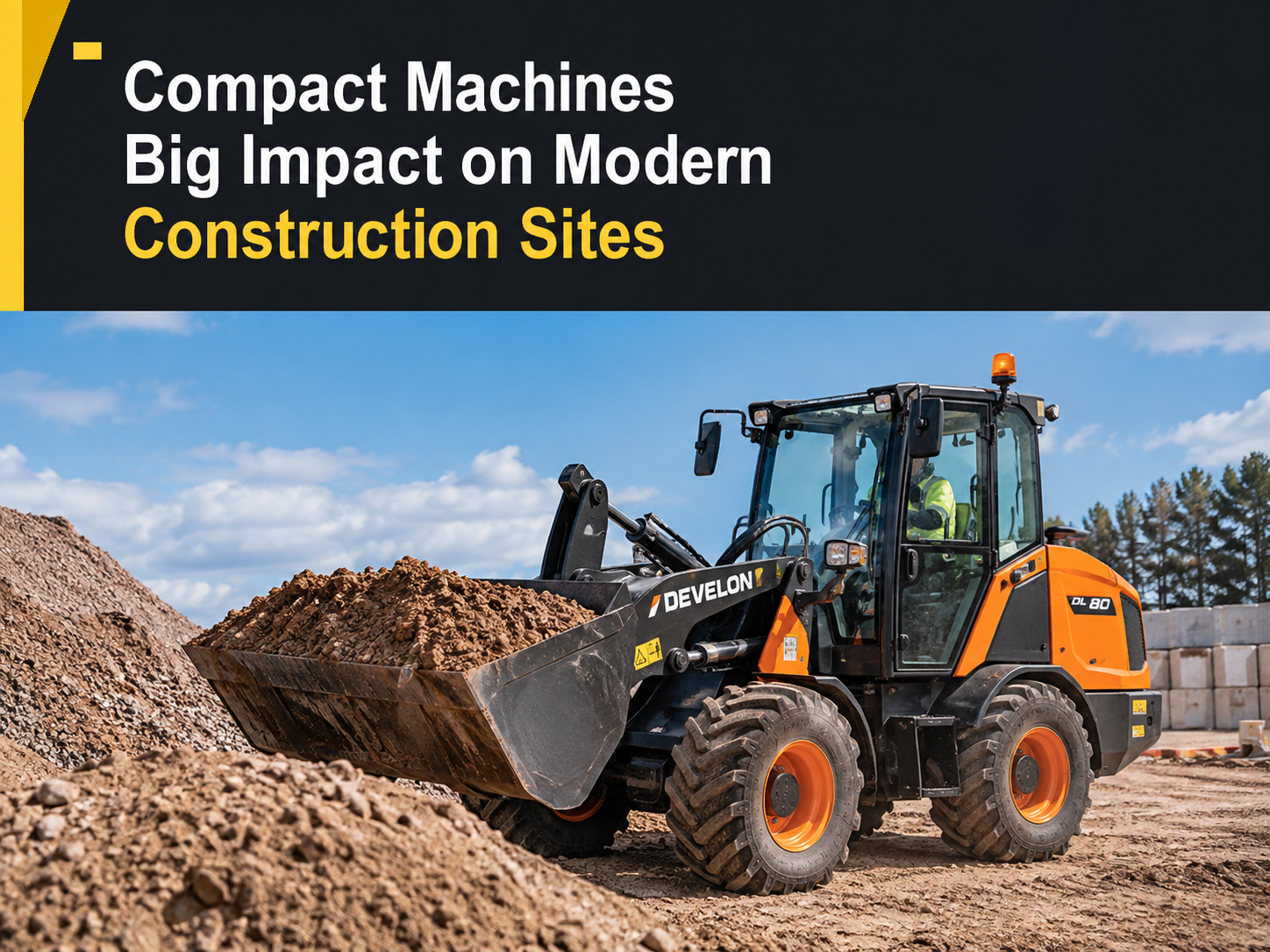
Compact construction machinery can make a big difference on sites where access is restricted, working space is limited and every movement needs to count. The right compact loader, mini excavator or site dumper can keep work moving without taking up more space than the job allows.
For contractors, choosing a smaller machine is about matching capability to the work. A machine that reaches the working area, handles the required load and moves efficiently between tasks can be more useful than a larger machine that struggles to get into position.
Why compact construction machinery earns its place on site
Residential extensions, landscaping projects and work around existing buildings often leave little room for plant. Delivery vehicles, stored materials and other trades all need space too.
Compact equipment gives site teams more options when planning how work will be carried out. Depending on the machine and application, benefits can include:
- Access through narrower entrances and routes
- Less space needed for turning and positioning
- Versatility through compatible attachments
- More practical transport between smaller jobs
- A closer match between machine capacity and daily workload
The biggest benefit is often the ability to bring mechanical help closer to the task, reducing repeated handling and unnecessary journeys across the site.
Better access can change how a job is organised
Imagine a landscaping project behind an existing property. Materials arrive at the front, but the work is at the rear. If a suitable compact loader can use the access route, it can carry materials much closer to where they are needed.
Before choosing equipment, measure the entire route. The entrance is only one part of the picture.
- Check the narrowest width and lowest overhead clearance
- Allow room for turning, attachments and the load being carried
- Assess ground conditions and the surfaces along the route
- Consider where the machine will load, unload and park
A compact footprint is useful only when the machine can also work effectively once it reaches its destination.
Productivity depends on the whole working cycle
Bucket size and engine power tell only part of the story. On a restricted site, time spent repositioning or waiting for a clear route can have a major effect on daily output.
A compact loader moving aggregate over a short route may complete useful work consistently because it can turn and position easily. A mini excavator may be able to work alongside an existing structure where a larger machine would need more space.
Compare machines against the actual task: the material being moved, the distance travelled, the required reach and the number of cycles needed. Larger equipment still has an important role where higher capacity or greater reach is required.
Attachments bring more flexibility to compact machines
Compatible attachments can help one machine support several stages of a project. A loader might move loose material with a bucket, then switch to pallet forks for suitable loads. An excavator may use different buckets for excavation and finishing work.
When considering attachments, check:
- The mounting system and locking arrangement
- Required hydraulic flow and pressure
- The attachment weight and its effect on available capacity
- The machine manufacturer’s approved applications and limits
Think about how often attachments will be changed and where they will be stored. A useful attachment setup should make the working day simpler.
Transport benefits need to be checked in practice
Moving equipment between jobs is part of the working day for many contractors. Some compact machines can offer more transport options than larger plant, helping businesses organise short jobs and moves between sites.
However, compact does not automatically mean suitable for your existing trailer or towing vehicle. Check the actual transport weight, including attachments and any equipment carried, against the capacities and requirements of the complete transport setup.
It is worth considering loading arrangements, suitable securing points and available space at both ends of the journey before choosing a machine.
Look at running costs alongside output
A smaller machine may use less fuel per hour, but the useful comparison is the cost of completing the job. If it needs considerably more cycles or spends too much time working at its limits, an apparent saving can disappear.
When comparing compact construction machinery, consider:
- Expected output on your typical jobs
- Fuel use during representative work
- Time spent idling, travelling and repositioning
- Servicing requirements and access to daily check points
- Wear parts, attachments and transport costs
This gives a clearer picture of value than purchase price or hourly fuel consumption alone.
Operator comfort and visibility still matter
Small machines can spend full working days on demanding sites. Clear visibility, comfortable seating and controls that are easy to use deserve attention when comparing models.
Try to assess the machine with the attachments it will actually use. Visibility of a bucket edge or fork tips can be very different from the view when the machine is parked with no load.
Compact dimensions also do not remove the need for planned routes and separation between people and moving plant. The machine must suit the site’s working arrangements as well as its access dimensions.
Choose the machine around your regular work
Before investing, write down the tasks that account for most of your working week. Include the loads, access restrictions, ground conditions and transport arrangements you encounter most often.
If you are comparing loaders, our guide to choosing the right compact loader for your work is a useful next step.
For excavation work, explore the Develon range and discuss the reach, digging performance and attachment requirements of your projects with the Kellands team.
Talk to Kellands about compact machinery
The best compact machine is one that fits your site and delivers the capability your work needs. Getting that balance right can improve access, reduce unnecessary handling and help your team make better use of the working day.
Contact Kellands Plant Sales to discuss compact machinery, attachments and the options for your business. Call our machine sales team on 01278 411542.